Spotify's Green Check: Verifying Human Artists in the Age of AI
In a digital landscape where AI-generated content blurs the line between reality and fabrication, Spotify is taking a stand to help listeners identify genuine human artistry. The streaming giant's new verification system, Verified by Spotify, awards a mint green checkmark to artists who pass rigorous authenticity checks. This initiative arrives amid rising AI scams, such as a fake song attributed to the long-deceased country singer Blaze Foley. Below, we explore the key questions surrounding this feature and Spotify's broader efforts to protect authenticity.
What is Spotify's new verification badge and how does it work?
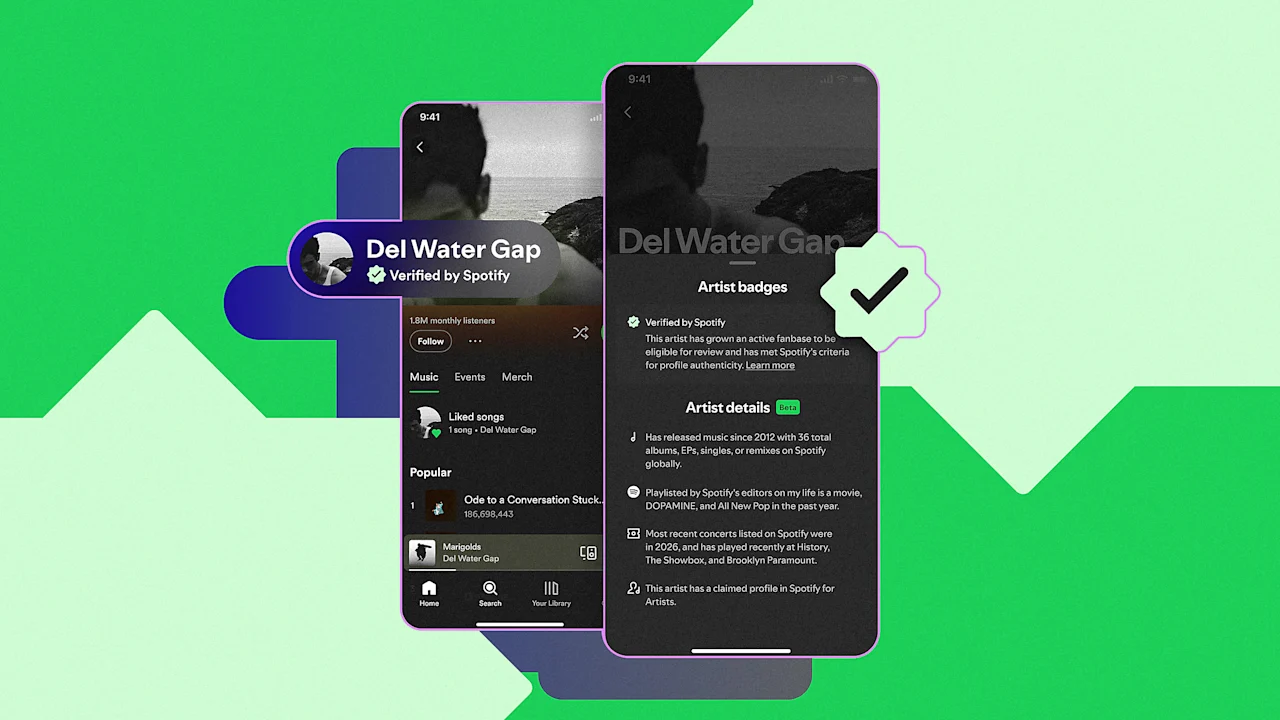
Spotify's verification badge is a mint green checkmark displayed on artist profiles, signaling that the account has been reviewed and confirmed as authentic. The company evaluates a combination of criteria, including listener activity data, engagement trends over time, and the artist's identifiable presence both on and off Spotify. However, the process isn't purely automated—Spotify pairs these standards with human review and judgment. This ensures that real artists acting in good faith are verified, rather than just filtering out obvious bad actors. The badge launches on April 30, and Spotify claims that over 99% of the artists that listeners actively search for will be verified at that time. Users will see the badges rolling out across profiles in the following weeks.
Why is verification necessary for Spotify artists?
The music industry has seen a surge in AI-generated scams, where fraudulent tracks are uploaded to streaming services under the names of famous musicians—even those who have died. A notable example involved a song attributed to country singer Blaze Foley, who passed away more than two decades ago. The track was actually created with artificial intelligence and uploaded by scammers hoping to collect royalties. Such incidents erode trust between listeners and artists, making it harder for fans to know if the music they hear is genuinely from the creator they admire. Spotify's verification badge directly addresses this problem by giving listeners a clear visual cue that a profile belongs to a real, vetted human artist, not an impersonator or AI-generated imitation.
What criteria does Spotify use to determine artist authenticity?
Spotify employs a multi-layered approach to verify authenticity. The company examines listener activity data to confirm that an artist has a genuine audience—not just bots or fake streams. Engagement over time is another key factor, as consistent interaction suggests an organic following. Additionally, Spotify looks for an identifiable artist presence both inside and outside the platform, such as official social media accounts, verified websites, or press coverage. These data points are then reviewed by human experts who assess good-faith behavior. This combination of metrics and manual review helps ensure that verification isn't simply a technical checkbox but a meaningful confirmation of human artistry.
What other safety features has Spotify introduced alongside verification?
Beyond the green checkmark, Spotify has rolled out several safeguards for artists and listeners. One key tool is Artist Profile Protection, an opt-in service that requires artists to manually authorize any new song before it appears on their profile. This prevents unauthorized uploads from being attributed to them. Additionally, Spotify has strengthened rules against impersonation, implemented a music spam filter, and is working toward industry-wide AI disclosures with credits. These measures create a comprehensive safety net that complements the verification badge, making it harder for scammers to exploit the platform while giving legitimate artists more control over their presence.
What is the new artist details section and how does it help listeners?
Spotify is also testing a beta feature called the artist details section, which functions like a nutritional facts label for an artist's profile. This section displays career milestones, release history, and touring activity—regardless of whether the artist is verified. Listeners can quickly scan this info to gauge an artist's legitimacy: for example, a steady release timeline and real-world tour dates are strong indicators of an active, human artist. The details section adds an extra layer of transparency, empowering fans to make informed decisions about the music they engage with, especially when encountering lesser-known or new profiles.
Will Spotify's verification approach evolve over time?
Yes, Spotify acknowledges that the concept of artist authenticity is complex and rapidly changing. In a statement, the company said: "In today’s music landscape, the concept of artist authenticity is complex and quickly evolving, and we’ll continue to develop our approach over time." This means the criteria and methods for verification may be updated as new AI technologies emerge and as the platform learns from real-world use. The badge itself is not a one-time solution; Spotify is committed to refining its safeguards to maintain trust. As artificial intelligence continues to advance, the battle between authenticity and impersonation will likely intensify, but Spotify's proactive stance suggests that verification will remain a dynamic, evolving feature.