Hubble Captures a Galaxy in Transition: NGC 1266's Post-Starburst Secrets
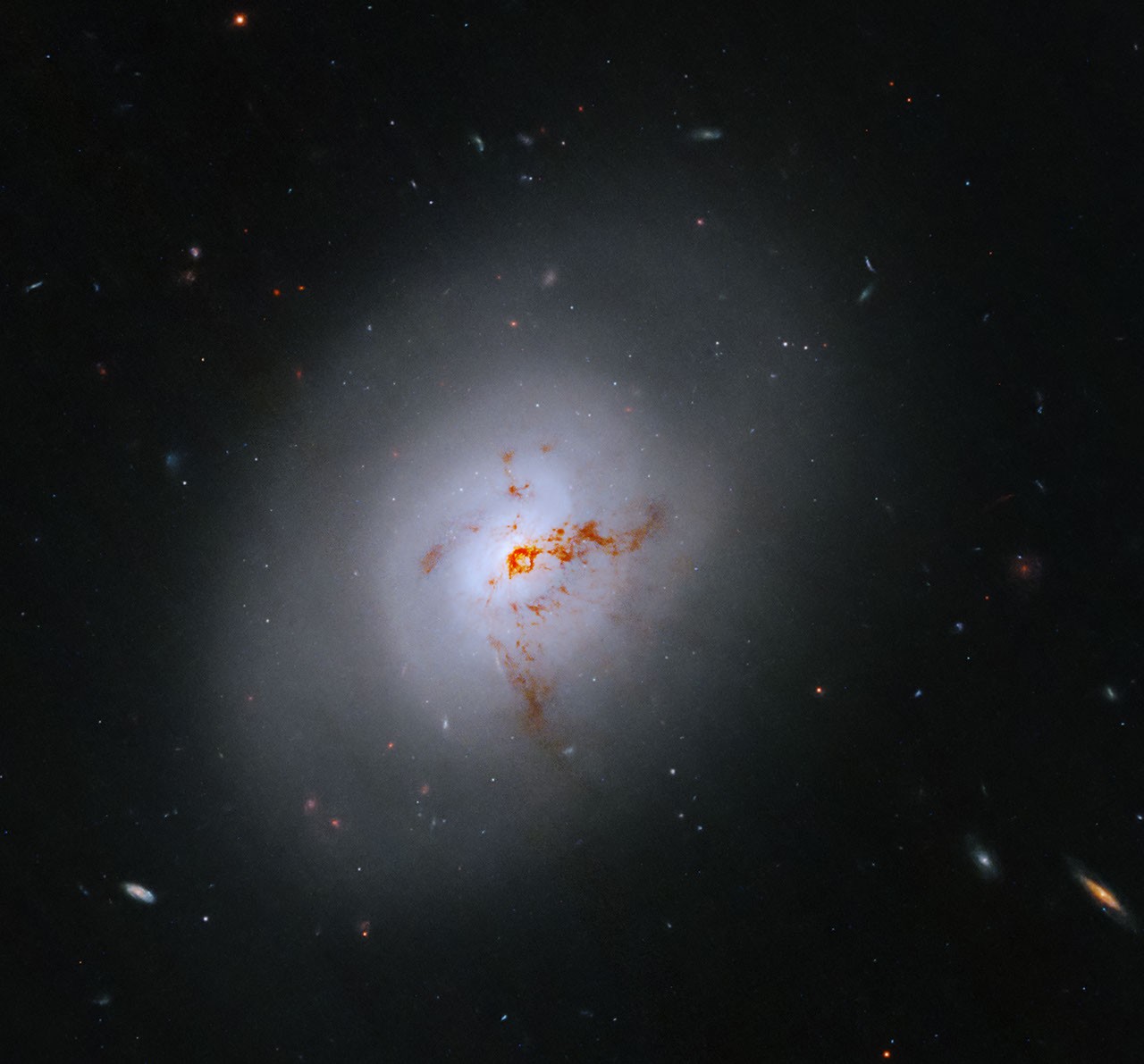
The universe is full of galaxies in various stages of cosmic evolution, and NASA's Hubble Space Telescope has captured a stunning view of one such object: NGC 1266. This lenticular galaxy, located about 100 million light-years away in the constellation Eridanus (the Celestial River), presents a fascinating snapshot of galactic transformation. Its bright central region and subtle hints of spiral structure contrast sharply with the lack of distinct arms, while dark dust lanes and distant background galaxies add depth to the image. But beyond its visual intrigue, NGC 1266 holds clues to a rare and dramatic phase in galactic life.
What Is a Lenticular Galaxy?
Astronomers classify galaxies into three main types: spiral, elliptical, and lenticular. Lenticulars, like NGC 1266, are often described as transitional objects that bridge the gap between spirals and ellipticals. They have a prominent central bulge and a flattened disk reminiscent of spiral galaxies, yet they lack the sweeping spiral arms and active star-forming regions that define spirals. Instead, their disks are smooth and featureless, more like those of elliptical galaxies. This hybrid nature makes lenticulars invaluable for understanding how galaxies evolve over time.
The Post-Starburst Phenomenon
NGC 1266 is not just any lenticular; it is a rare post-starburst galaxy, a category that accounts for only about one percent of the local galaxy population. Post-starburst galaxies have experienced a recent, intense episode of star formation that has since subsided. Evidence includes a young population of stars but very few regions where new stars are currently forming. This peculiar state suggests that NGC 1266 is in transition from a starburst phase to a quiescent future—likely evolving into a standard elliptical galaxy with little star formation.
A History of Cosmic Collision
What triggered the starburst? Astronomers believe that NGC 1266 underwent a minor merger with another galaxy approximately 500 million years ago. This collision, though not a full-scale galactic smashup, provided a gravitational jolt that compressed gas clouds and ignited a burst of star formation. The merger also funneled large amounts of gas toward the galaxy's center, increasing the mass of its already substantial bulge. However, the most dramatic consequence was the feeding of its supermassive black hole.
The Active Galactic Nucleus
The influx of gas into the galaxy's core turned the central black hole into a powerful active galactic nucleus (AGN). As matter spirals into the black hole, it heats up and emits intense radiation across the electromagnetic spectrum. This AGN likely plays a role in regulating the galaxy's star formation, possibly by injecting energy that heats or disperses remaining gas. Understanding the interplay between mergers, starbursts, and AGN activity is a key goal of modern astrophysics, and NGC 1266 provides a perfect laboratory for such studies.
Hubble's View of NGC 1266
The Hubble image reveals the galaxy's complex structure in exquisite detail. Its bright core dominates the center, while reddish-brown clumps and filaments of dust partially obscure the face of the galaxy. These dust lanes are remnants of the merger and ongoing AGN activity. Beyond the galaxy's diffuse outer regions, a sprinkling of red, blue, and orange light from distant galaxies dots the background, offering a deeper cosmic context. The image was captured using Hubble's Wide Field Camera 3 and processed to highlight both the galaxy's subtle features and the surrounding field.
NGC 1266 serves as a living example of galactic evolution—a snapshot of a galaxy caught between its active past and its quiet future. By studying such objects, astronomers hope to piece together the full story of how galaxies grow, merge, and eventually settle into the serene ellipticals that populate our universe today. Hubble's ongoing observations continue to reveal these hidden transitions, reminding us that even in the vast stillness of space, change is always happening.