A Detailed Guide to Analyzing Spiral Galaxy NGC 3137 from Hubble Data
Overview
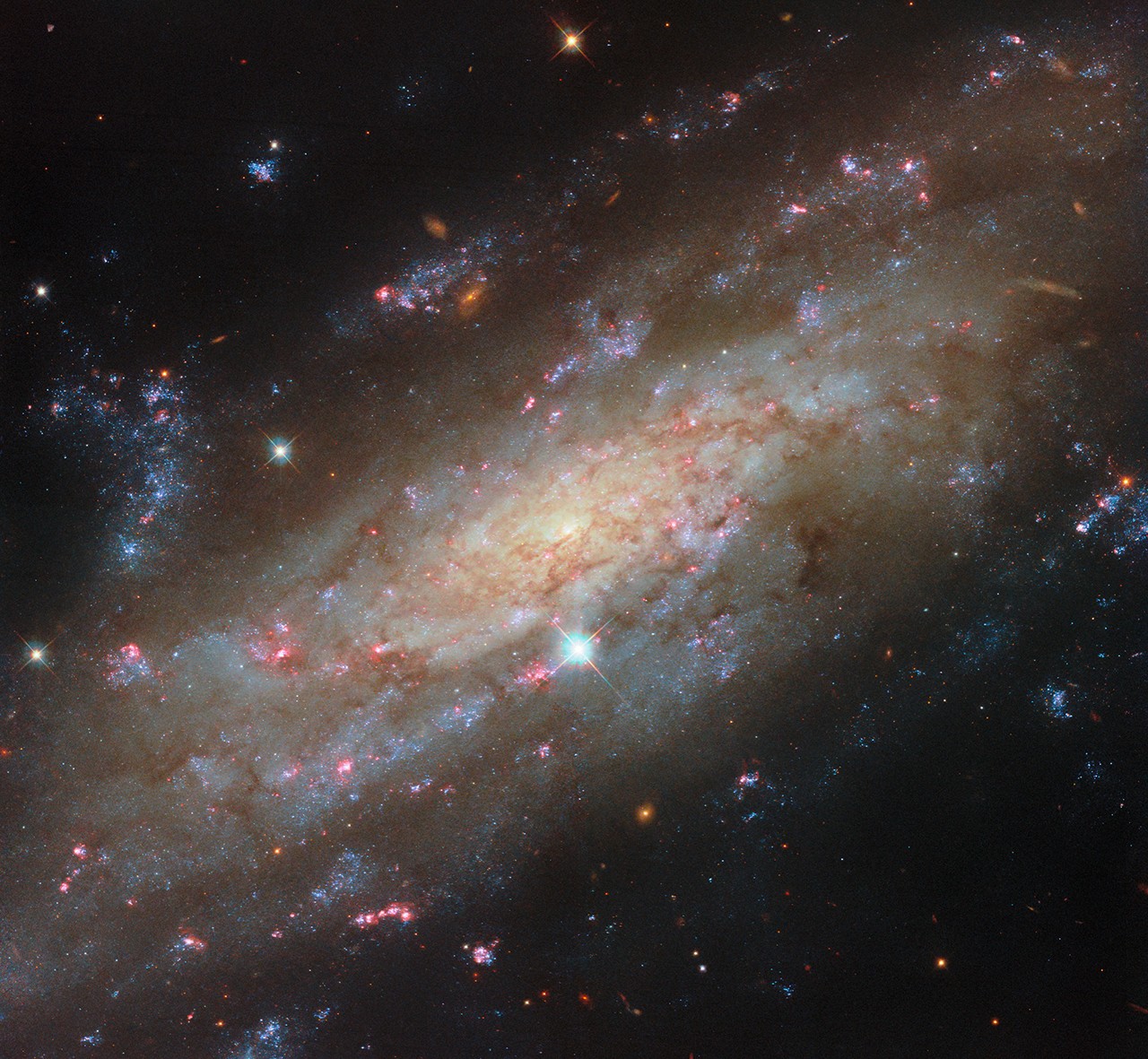
This tutorial walks you through the scientific analysis of the spiral galaxy NGC 3137, as captured by the NASA/ESA Hubble Space Telescope. Originally featured in a Hubble news release, this target offers a rich case study in galaxy structure, stellar evolution, and galactic dynamics. By the end of this guide, you will understand how astronomers use multi-band imaging to study a nearby spiral, interpret its inclined orientation, and connect it to our own cosmic neighborhood. The guide is designed for enthusiasts with a basic background in astronomy who want to dive deeper into real observational data.
Prerequisites
Before starting, ensure you have:
- Familiarity with basic astronomical terms (galaxy types, light-years, black holes).
- An understanding of how telescopes capture images in different filters.
- Optional: access to online Hubble image archives (e.g., Hubble Legacy Archive) for hands-on exploration.
- No programming knowledge is required; we use descriptive steps rather than code.
Step-by-Step Analysis Guide
Step 1: Identify the Galaxy's Location and Distance
NGC 3137 lies 53 million light-years away in the southern constellation Antlia (the Air Pump). This moderate distance places it within a galaxy group that is comparable to our own Local Group. To confirm its coordinates, you can look up its right ascension and declination (10ʰ 03 44.2ˢ, –29° 42′ 00″) in online databases like SIMBAD. Understanding the distance is crucial because it allows astronomers to calibrate the true physical size of the galaxy and the luminosities of its stars.
Step 2: Place NGC 3137 in Its Galactic Environment
NGC 3137 belongs to the NGC 3175 group, which contains two large spiral galaxies (NGC 3137 and NGC 3175) plus numerous dwarf galaxies. This group is thought to resemble the Local Group, where the Milky Way and Andromeda dominate. By studying NGC 3137 and its companions, astronomers can infer how galaxy interactions and mergers shape structure. More than 500 dwarf galaxy candidates have been identified in this group, offering a laboratory for understanding dark matter halos and satellite systems. Compare this to the ~50‑60 known dwarf galaxies in the Local Group.
Step 3: Interpret the Six‑Band Color Composite
Hubble observed NGC 3137 through six different color filters (ultraviolet, blue, green, red, near‑infrared, and a narrow H‑alpha filter). The resulting image highlights different stellar populations and dust features:
- Ultraviolet/blue traces young, hot stars in star‑forming regions.
- Green/red shows older stellar populations.
- H‑alpha pinpoints regions of active star formation (ionized hydrogen).
- Near‑infrared pierces dust clouds to reveal the underlying older disk.
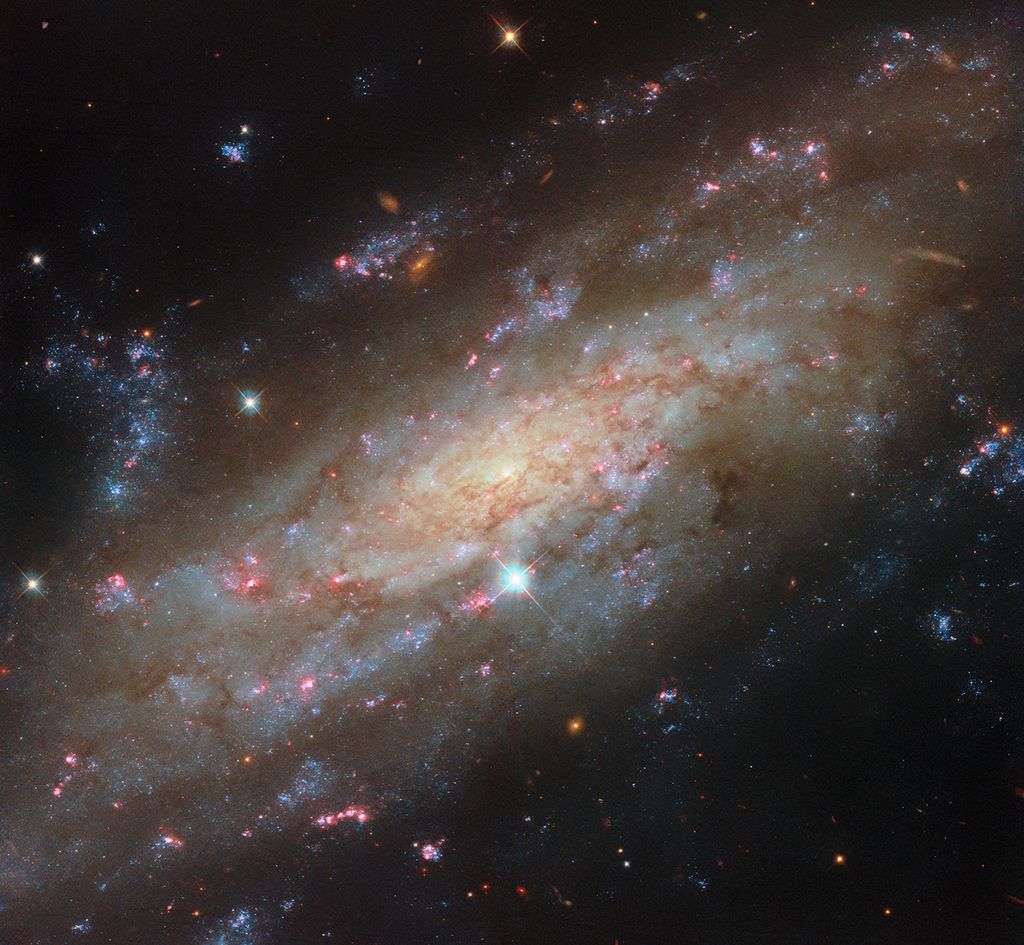
When you view the final image, note the patchy blue knots along the spiral arms – these are clusters of massive young stars. The reddish patches are dust lanes absorbing shorter wavelengths.
Step 4: Characterize the Central Supermassive Black Hole
At the galaxy’s core lies a supermassive black hole with an estimated mass of 60 million solar masses (by comparison, the Milky Way’s black hole is about 4 million solar masses). This estimate comes from dynamical measurements of gas and stars orbiting the center. In the Hubble image, the core appears as a bright, point‑like source surrounded by fine dusty clouds. Look for a slight asymmetry in the brightness distribution – that is often evidence of dust obscuration near the black hole.
Step 5: Analyze the Inclined Spiral Structure
NGC 3137 is highly inclined (estimated 60–70° from face‑on) to our line of sight. This inclination gives a unique perspective: instead of a perfect face‑on spiral, you see an elliptical shape with the spiral arms foreshortened. The arms appear “loose and feathery” rather than tightly wound. Dust lanes running along the arms are sharply defined because we view them edge‑on. Tracing these lanes can reveal the direction of galactic rotation (using Doppler shift data not shown in the image).
Common Mistakes
- Misinterpreting the inclination: Many beginners assume the galaxy is face‑on because spiral arms are visible. Remember that any elliptical outline indicates tilt – measure the axis ratio to quantify it.
- Confusing the galaxy group membership: NGC 3137 is part of the NGC 3175 group, not the Local Group. It is merely “similar” to the Local Group.
- Overlooking dwarf galaxies: The 500+ candidates are faint and often ignored. Their presence is key to understanding galaxy group dynamics.
- Thinking color bands are arbitrary: Each filter has a specific scientific purpose; don’t treat them as simple “pretty colors”.
- Ignoring the central black hole: The bright nucleus is often assumed to be just a star cluster – but data confirms a supermassive black hole.
Summary
By methodically walking through location, environment, multi‑band imagery, central black hole, and inclination, you can gain a comprehensive understanding of spiral galaxy NGC 3137. This Hubble observation demonstrates how modern astrophysics uses a nearby, well‑resolved galaxy to study processes that also occur in our own Milky Way. The six‑band composite reveals star formation and dust morphology, while the group context connects NGC 3137 to larger cosmological questions. Apply these steps to any other spiral galaxy image to unlock its secrets.
For a deeper dive, explore the NGC 3137 entry on Wikipedia or the Hubble Science site.